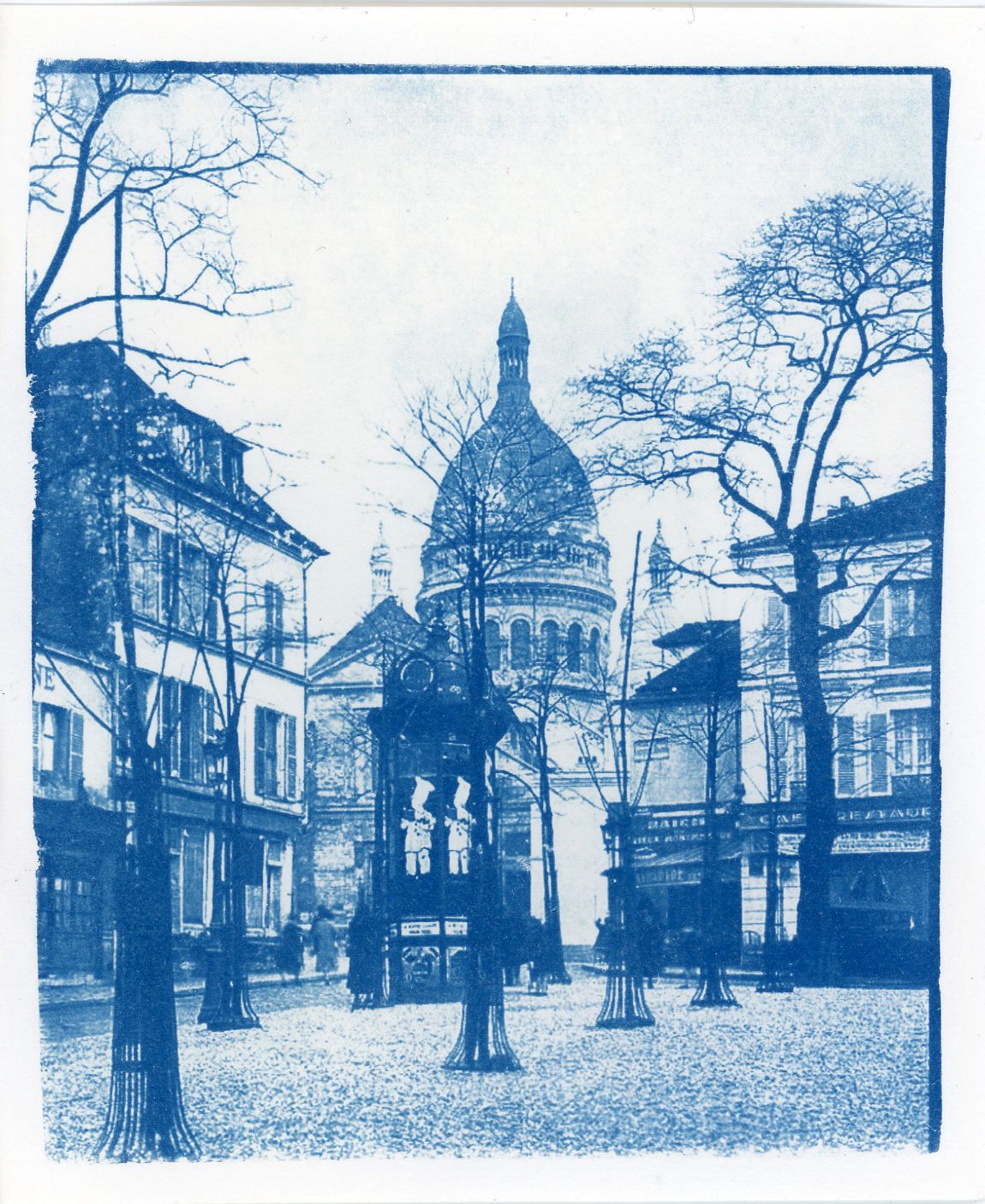
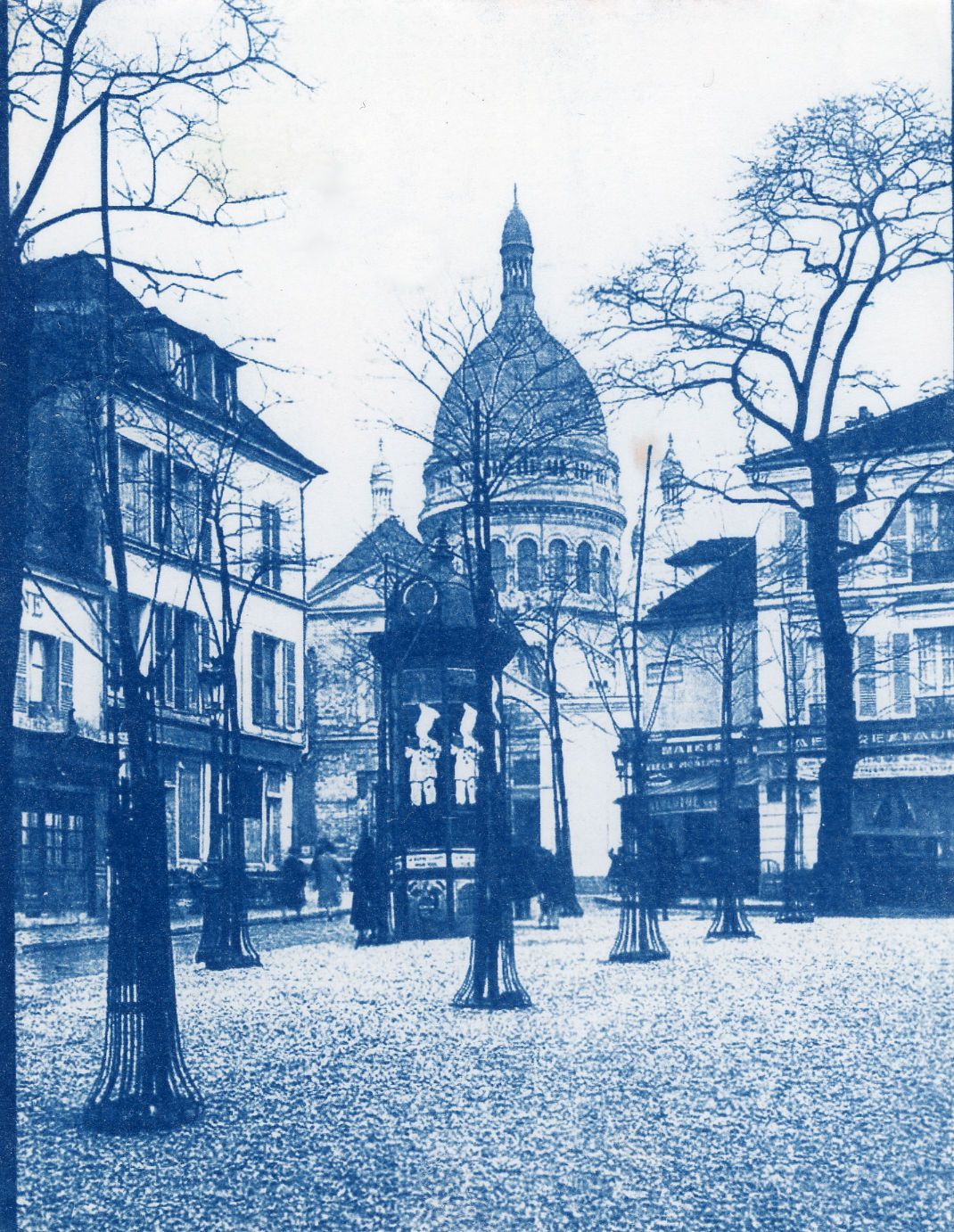
Cyanotype
Inventé en 1842 par John Herschel, ce procédé photographique ancien utilisant des sels de fer (citrate d’ammonium ferrique et ferricyanure de potassium). Exposé aux UV, il crée une image bleu de Prusse insoluble après rinçage à l’eau. Simple et économique, il fut utilisé pour les plans techniques ("blueprints") avant de devenir un procédé artistique. Sous l'effet des UV, le citrate d'ammonium ferrique (Fe³⁺) est réduit en ion ferreux (Fe²⁺), tandis que le ferricyanure de potassium se transforme en ferrocyanure.